Chapter 08 · 539 – 330 BCE
Achaemenid Persian
Persian rule, the long twilight of cuneiform.
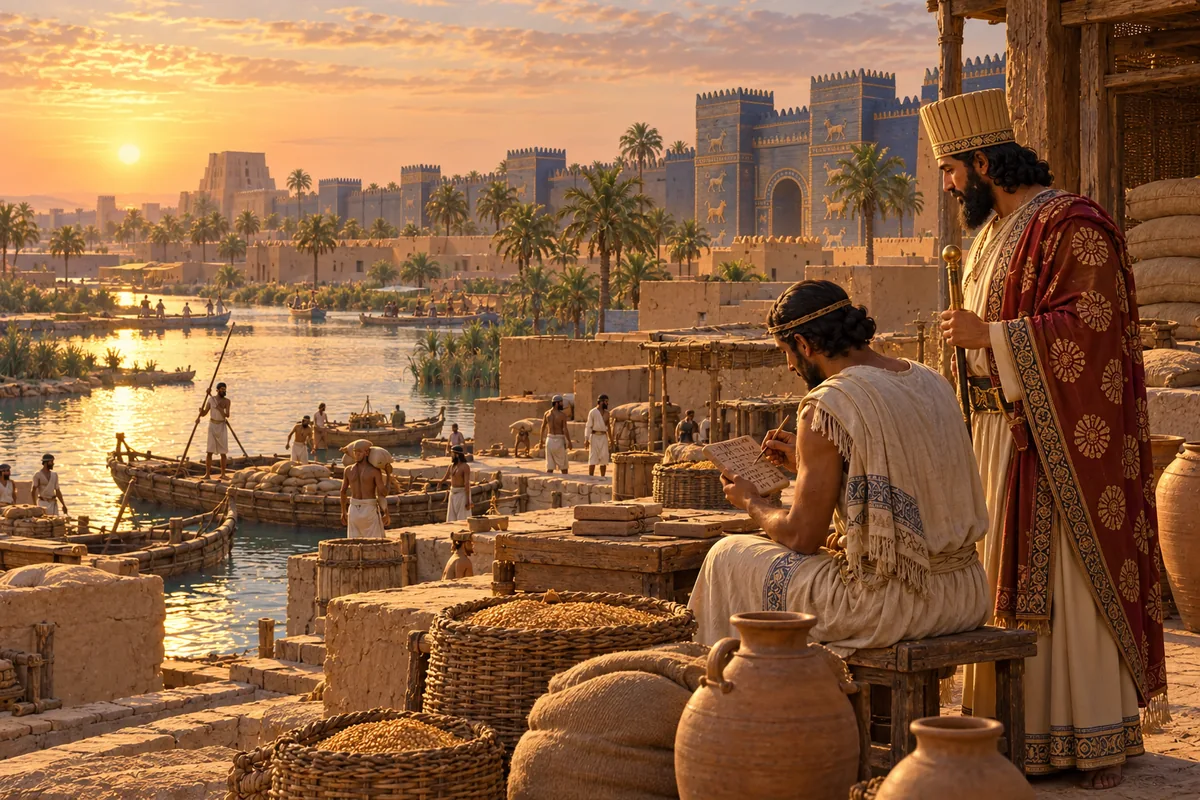
~430 BCE · OIM L— — PFAP, Oriental Institute, University of Chicago, Chicago, Illinois, USA
OIP 092, 0402
In plain English
Receipt: sixteen quarts of wine, drawn from the stock managed by Uštana. Bagirabba took delivery and used the wine to carry out the abbamuš ceremony at Abbakannuš. Filed under the month of Miyakannaš — roughly November–December. In short: a duly recorded disbursement of ceremonial wine, signed off by the local supply administration.
AI-generated reading paraphrase; compare with the translation below.
“16 qa of wine, supplied by (kurmin) Uštana: Bagirabba received (it). He used it for the abbamuš (ceremony) at Abbakannuš. Month: Miyakannaš (the ninth month).”
Source: engine:claude-fable-5 (2026-07-12/v7-evolved) · claude-fable-5 · medium confidence
Read the full tablet entry~430 BCE · OIM L— — PFAP, Oriental Institute, University of Chicago, Chicago, Illinois, USA
OIP 092, 0403
In plain English
Twenty-five BAR of flour — on the order of a couple of hundred liters — was issued from Rasamadana's stock. Ammakšedda took delivery of it and used it on behalf of Kurakaraš. The transaction is dated to the eighteenth year of the king's reign, in the month of Karbašiyaš. The exact purpose the flour was put to is written with terms whose meaning is no longer certain.
AI-generated reading paraphrase; compare with the translation below.
“25 BAR (measures) of flour, at the disposal of (kurmin of) Rasamada[na]; Ammakšedda took/received (it); he made/prepared (it) for the ... of Kurakaraš. In the 18th year, in the month Karbašiyaš.”
Source: engine:claude-opus-5 (2026-07-12/v7-evolved) · claude-opus-5 · low confidence
Read the full tablet entry~430 BCE · OIM L— — PFAP, Oriental Institute, University of Chicago, Chicago, Illinois, USA
OIP 092, 0404
In plain English
Twenty measures of flour, issued from Rašamadana's stores, were received by Baduzirma; Kurkaraš handled the transaction. Dated to the twentieth regnal year. It is a one-line receipt of the kind Persepolis clerks wrote by the thousand — who supplied the grain, who took delivery, who signed off, and when.
AI-generated reading paraphrase; compare with the translation below.
“20 (quarts) of flour, the supply (kurmin) of Rašamadana; Baduzirma received (it). At/of Kurkaraš he performed (the transaction). Year 20 (of the king).”
Source: engine:claude-opus-5 (2026-07-12/v7-evolved) · claude-opus-5 · medium confidence
Read the full tablet entry~430 BCE · OIM L— — PFAP, Oriental Institute, University of Chicago, Chicago, Illinois, USA
OIP 092, 0405
In plain English
Receipt: twenty measures of flour (roughly two hundred liters), issued from Ištimanka's account and taken in by Irdapuka. Kurakaraš is responsible for processing it, and it is to be placed in the storehouse at Kampirriš, in Iršena's charge. Dated the first month of the year, Hadukannaš, in the twenty-second year of the king — that is, spring of 500 BCE, under Darius I.
AI-generated reading paraphrase; compare with the translation below.
“20 BAR of flour, supplied by Ištimanka; Irdapuka received (it). Kurakaraš is the one who processes (it); it is to be deposited in the treasury at Kampirriš, (for/by) Iršena. Month Hadukannaš (Adukanaiša), year 22.”
Source: engine:claude-opus-5 (2026-07-12/v7-evolved) · claude-opus-5 · medium confidence
Read the full tablet entry~430 BCE · OIM L— — PFAP, Oriental Institute, University of Chicago, Chicago, Illinois, USA
OIP 092, 0406
In plain English
Twenty-five measures of flour were issued from Irtuppiyana's stores and collected by Pirmayabada. The middle line, which explains the reason for the issue, is only partly intelligible: it refers to work being carried out and to an allocation made at the treasury. The receipt is dated to the month of Turmar in the twenty-second year of the king's reign — roughly spring 500 BCE, under Darius I.
AI-generated reading paraphrase; compare with the translation below.
“25 BAR-measures of flour, from the supply (kurmin) of Irtuppiyana, Pirmayabada received. (As?) kurakraš he was performing [the work] of ...-unair; at the treasury (kapnuški) it was ...(irše-na), being apportioned (šaramanna). Month: Turmar. Year 22 (of the king).”
Source: engine:claude-opus-5 (2026-07-12/v7-evolved) · claude-opus-5 · low confidence
Read the full tablet entry